
Private credit investing continues to evolve beyond traditional lending categories. In the latest episode of Beyond the Stock Market, Groundfloor CEO Brian Dally sat down with Michael Davis, CEO and co-founder of Homegrown, to discuss a new investing opportunity focused on revenue-based financing for brick-and-mortar businesses.
As Groundfloor prepares to announce a new investment opportunity with Homegrown later this month, Davis joined the podcast to share more about the company’s mission, how its revenue-based financing model works, and why investors are increasingly paying attention to this growing segment of private credit.
The conversation explored how independent businesses, including restaurants, fitness studios, coffee shops, and retail operators, often struggle to secure flexible expansion capital through traditional banks, even when they have proven operating histories and strong customer demand. At the same time, investors are looking for alternative investments that offer diversification, recurring cash flow potential, and exposure to tangible sectors of the economy.
The upcoming partnership also reflects Groundfloor’s broader expansion into private credit and specialty finance opportunities, while continuing to focus on transparent, income-oriented investing solutions for individual investors.

Why Groundfloor Is Expanding Into Private Credit Opportunities
Groundfloor has long focused on opening access to private market investing. While the company is known for real estate-backed investing products, the platform has also expanded into private credit and specialty finance categories that offer investors additional diversification opportunities.
The Homegrown partnership introduces investors to a different segment of the physical economy: established brick-and-mortar businesses seeking expansion capital.
During the podcast, Davis explained that many successful operators are underserved by traditional banks, even when their businesses are profitable and growing.
“We’re not startup capital. We’re not even early-stage capital. We’re acceleration capital. We’re the capital when you have something that is working.”
Rather than funding brand-new businesses, Homegrown focuses on established operators with multiple locations and proven cash flow histories.
What Makes Homegrown’s Revenue-Based Financing Different
Unlike traditional equity investments or conventional loans, Homegrown structures investments as revenue-sharing contracts. Davis described the model this way:
“Homegrown has been structured as a revenue contract that pays monthly cash flow to our investors.”
Instead of taking ownership stakes in businesses, investors participate in contracts tied to a percentage of company revenue over time.
According to Davis, a typical arrangement might involve providing a business with growth capital in exchange for a small percentage of monthly revenue until a capped return threshold is reached.
This structure is designed to align investor performance with business performance while also helping operators preserve cash flow.
“One of the things that is really important to us is risk management. A way you manage risk is by protecting the cash flow of the borrower.”
For investors, this creates exposure to businesses already generating revenue, rather than relying entirely on future projections.
Why Investors Are Paying Attention to Revenue-Based Financing
Private credit has become one of the fastest-growing segments of alternative investing. However, many investors still associate private credit primarily with corporate lending or real estate debt.
The Groundfloor and Homegrown partnership introduces another category: revenue-based financing for local businesses.
According to Davis, one reason investors are responding positively is the combination of recurring cash flow potential and tangible underlying businesses.
“What if you had taken 10% of that, 5% of that, and put it into something that actually gave you cash flow immediately every month?”
For investors seeking alternatives to stocks, bonds, CDs, or high-yield savings accounts, this type of investment may provide additional diversification within a broader portfolio strategy.
Groundfloor’s investor education framework emphasizes how private credit can complement traditional public market investments, particularly for investors looking to build more resilient portfolios.
How Homegrown Evaluates Risk
One of the most important themes in the podcast episode was underwriting discipline.
Homegrown does not focus on first-time entrepreneurs or speculative expansion plans. Instead, the company evaluates businesses with established operating histories, customer demand, and multiple locations already generating revenue.
Davis explained that the company looks closely at how operators performed during periods of economic stress.
“We like to partner with companies that have a longer track record. I can actually go and do an analysis on your financials, your bank data, I can look at your customer reviews, and I can talk to you and get a more complete picture of how you handle these dislocating events.”
That emphasis on underwriting and downside protection aligns with Groundfloor’s broader approach to private market investing.
Dally also highlighted how diversification across multiple operating locations can help reduce concentration risk.
“You’re not betting on the cash flow of the new location.”
Instead, investors gain exposure to businesses with existing revenue streams and operational track records.
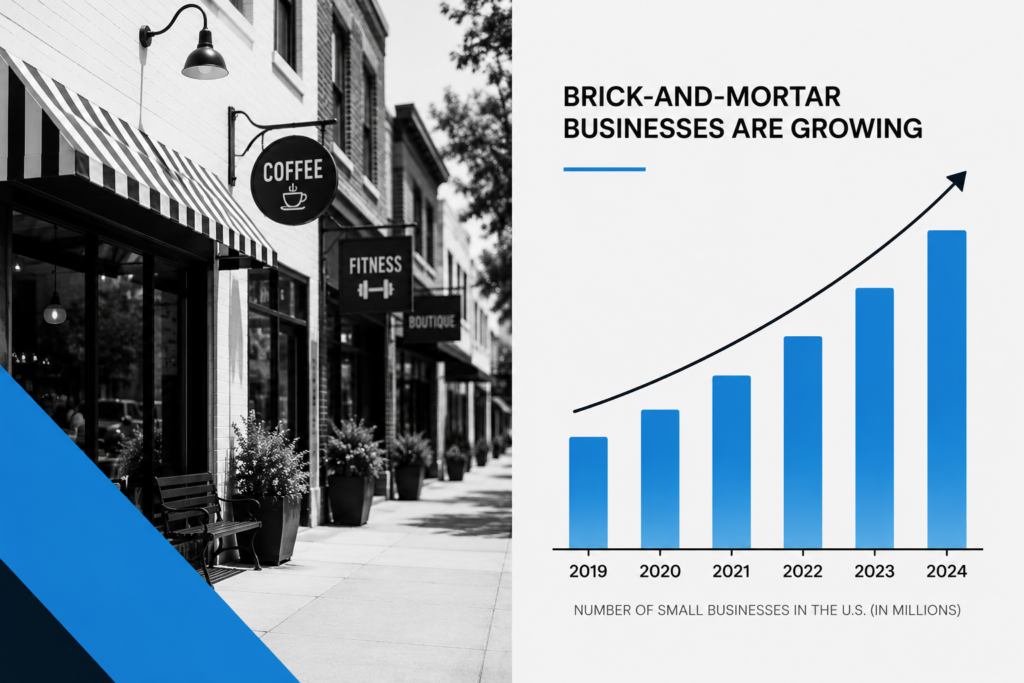
Brick-and-Mortar Businesses Still Matter in the AI Economy
Davis described brick-and-mortar businesses as an “AI shock absorption layer,” arguing that local businesses continue to provide essential jobs, services, and community infrastructure.
“Coffee shops, yoga studios, restaurants, doctor’s offices, and all the types of places that we back are important career points for people.”
He also noted that many younger entrepreneurs are increasingly drawn toward physical businesses and community-focused brands.
“I’m hearing way more brick-and-mortar entrepreneurship. We want to be a part of supporting that layer because we think it’s how we respond in part to AI.”
For investors, this creates exposure to sectors tied to everyday consumer behavior and local economic activity.
Why This Partnership Fits Groundfloor’s Long-Term Strategy for Investors
Groundfloor’s broader product strategy centers on expanding access to multiple private market investment categories, including fixed income alternatives, real estate, private credit, private equity, and specialty finance.
The Homegrown partnership fits naturally within Groundfloor’s specialty finance and private credit expansion.
This multi-category approach allows investors to discover different types of opportunities depending on their goals, whether they are seeking:
- Fixed income alternatives
- Private credit exposure
- Real estate-backed investing
- Monthly cash flow opportunities
- Diversification beyond public markets
Groundfloor’s educational materials also highlight growing investor demand for alternatives that provide transparency, shorter durations, and lower minimums compared to traditional institutional private market funds.
What Investors Should Understand About Risk and Return
Like any private market investment, revenue-based financing involves risk. Business performance can fluctuate, economic conditions can change, and not every expansion succeeds.
However, both Dally and Davis emphasized the importance of realistic underwriting, downside protection, and transparent communication with investors.
Davis summarized the philosophy this way:
“I don’t trust anyone who’s like, ‘There’s no risk.’ No, there’s always risk. Tell me the risk clearly so that I can make my own informed decision.”
For investors exploring alternative investments, understanding how different products generate returns, manage risk, and fit into an overall portfolio remains essential.
The Bigger Picture for Private Market Investing
The partnership between Groundfloor and Homegrown highlights how private credit continues expanding beyond traditional institutional channels.
Instead of limiting access to large funds or institutions only, new investing models are creating more ways for individuals to participate in segments of the economy that were historically difficult to access.
As private markets evolve, investors are increasingly looking for opportunities tied to tangible businesses, recurring cash flow, and sectors connected to daily economic activity.
That trend is one reason Groundfloor continues building new pathways into private market investing categories beyond traditional real estate lending.
Listen to the Full Podcast Episode
The full episode of Beyond the Stock Market with Michael Davis explores:
- Revenue-based financing explained
- How Homegrown structures investments
- Why traditional banks often underserve small businesses
- Risk management in private credit
- The future of brick-and-mortar entrepreneurship
- How investors think about alternative income opportunities
Start Exploring Private Market Investing With Groundfloor
Groundfloor continues expanding access to private market investments through real estate-backed investing, private credit, and specialty finance opportunities designed for modern investors.
For investors looking to diversify beyond stocks and traditional fixed income products, Groundfloor’s flagship Notes products provide an accessible starting point with defined durations and income-focused investing opportunities.Explore Groundfloor Notes and discover how private market investing can complement a diversified portfolio.
FAQ: Groundfloor and Homegrown Partnership
Homegrown is a fintech company that provides revenue-based financing to established brick-and-mortar businesses, including restaurants, coffee shops, fitness studios, and retail operators.
Revenue-based financing is a funding structure where investors receive payments tied to a percentage of a business’s revenue over time instead of taking equity ownership.
Traditional private equity investing often involves long holding periods and ownership stakes. Revenue-based financing focuses on recurring cash flow tied to business revenue instead of equity appreciation.
The partnership expands Groundfloor’s private credit and specialty finance offerings while giving investors access to additional alternative investment opportunities tied to real-world businesses.
Yes. Homegrown focuses on established businesses with existing locations, operating histories, and recurring revenue.