Inflation, Interest Rates, Stock Market Valuations, and Private Markets
The second quarter of 2026 reminded investors that markets rarely move in a straight line. Rising geopolitical tensions, persistent inflation, shifting interest rate expectations, and continued enthusiasm for artificial intelligence created one of the year’s most eventful quarters. Here’s what happened, what it means for investors, and how we’re thinking about portfolio positioning heading into the second half of 2026.
The conflict with Iran, which started in February, raged on for most of Q2. Volatility was most pronounced in Energy as oil prices spiked throughout the quarter and then receded nearly 40% in June as a preliminary agreement was reached to end hostilities. Brent Crude is back at pre-war levels while gasoline prices at the pump remain slightly elevated.
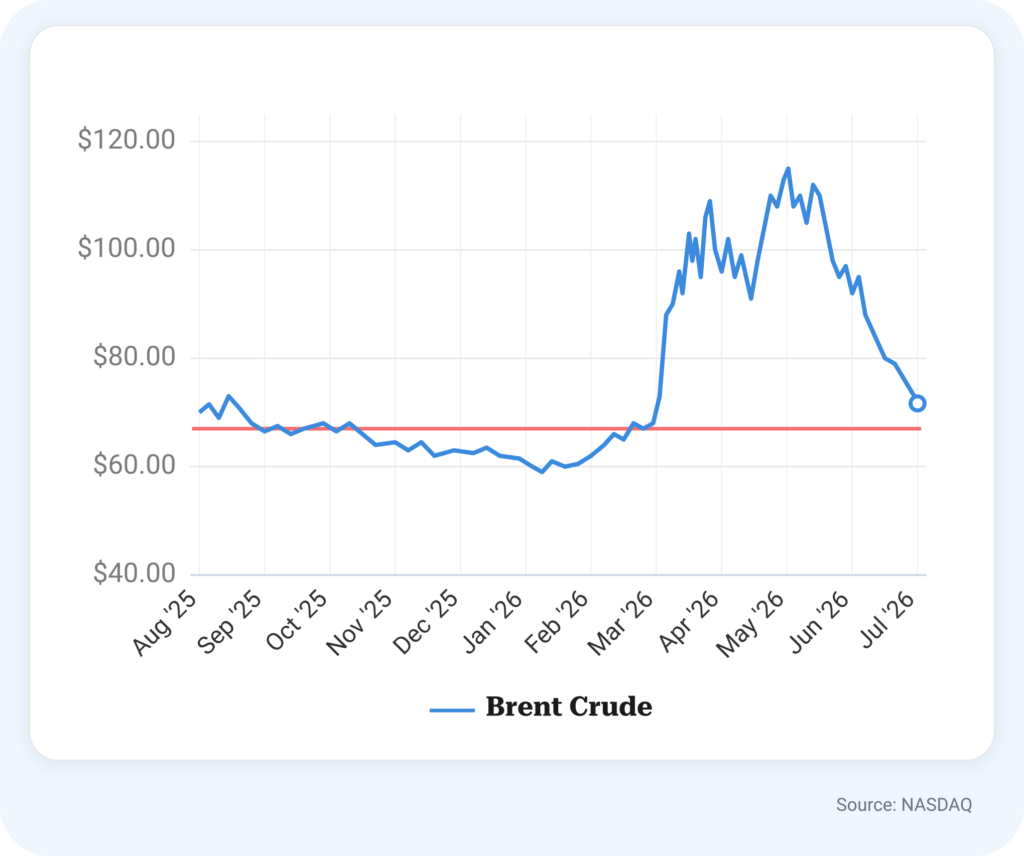
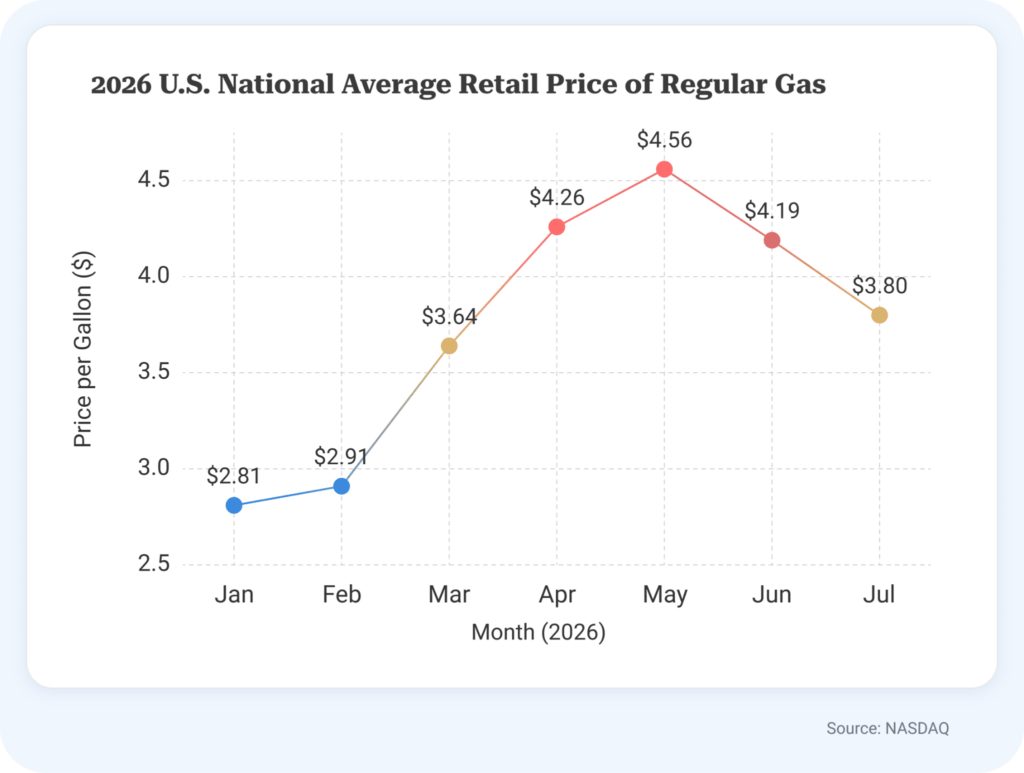
The rise in oil prices during the quarter sparked inflation concerns which, in turn, caused bond yields to hit a multi-year peak in May. While yields subsequently cooled down, worry persists as Inflation hovers near 4%.
Coming into the year, many had expected the FED to cut rates an additional 50-75 basis points to guide the Economy into a soft landing. However, geopolitical tensions led to a strong resurgence in inflation (driven primarily by global commodity shocks). This has resulted in new Federal Reserve Chair Kevin Warsh signaling that rates could be higher for longer with an absolute commitment to price stability.
Equity Markets & Valuation Trends
Despite geopolitical concerns, equity markets put on a show in Q2. The S&P 500 returned 15%; its highest quarterly return since the pandemic. The rally was fueled by strong corporate earnings and the continued boom in AI investments. The Philadelphia SOX Index (30 largest U.S.-listed companies involved in the design, distribution, manufacture, and sale of semiconductors) rose 81% in the quarter.
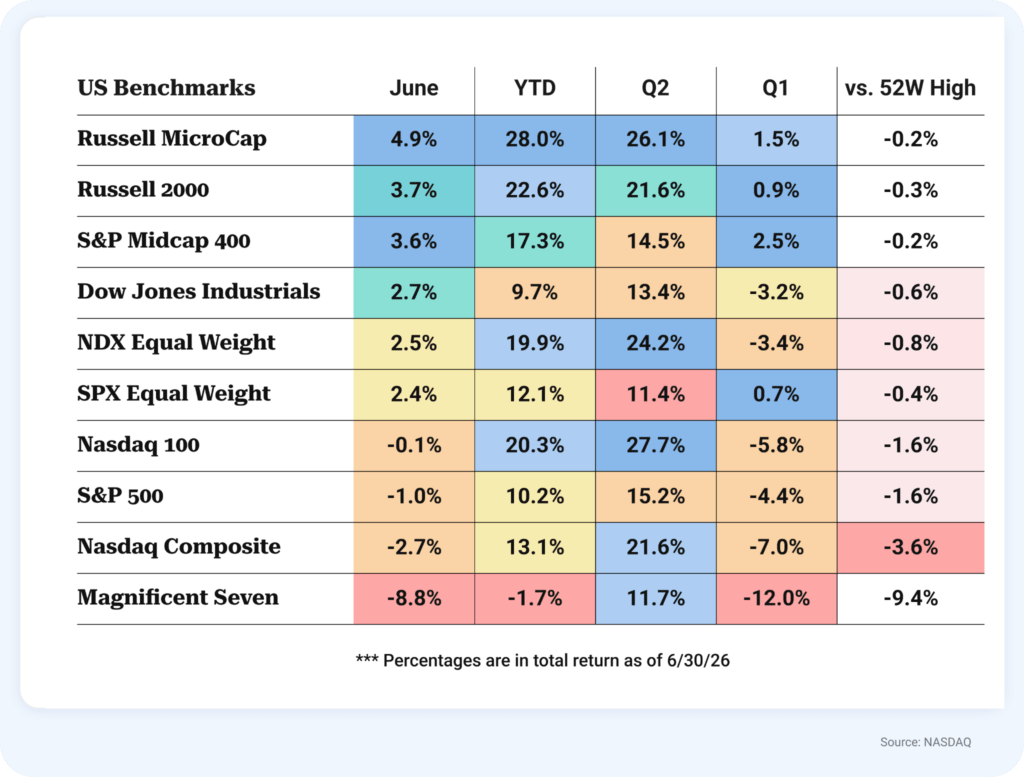
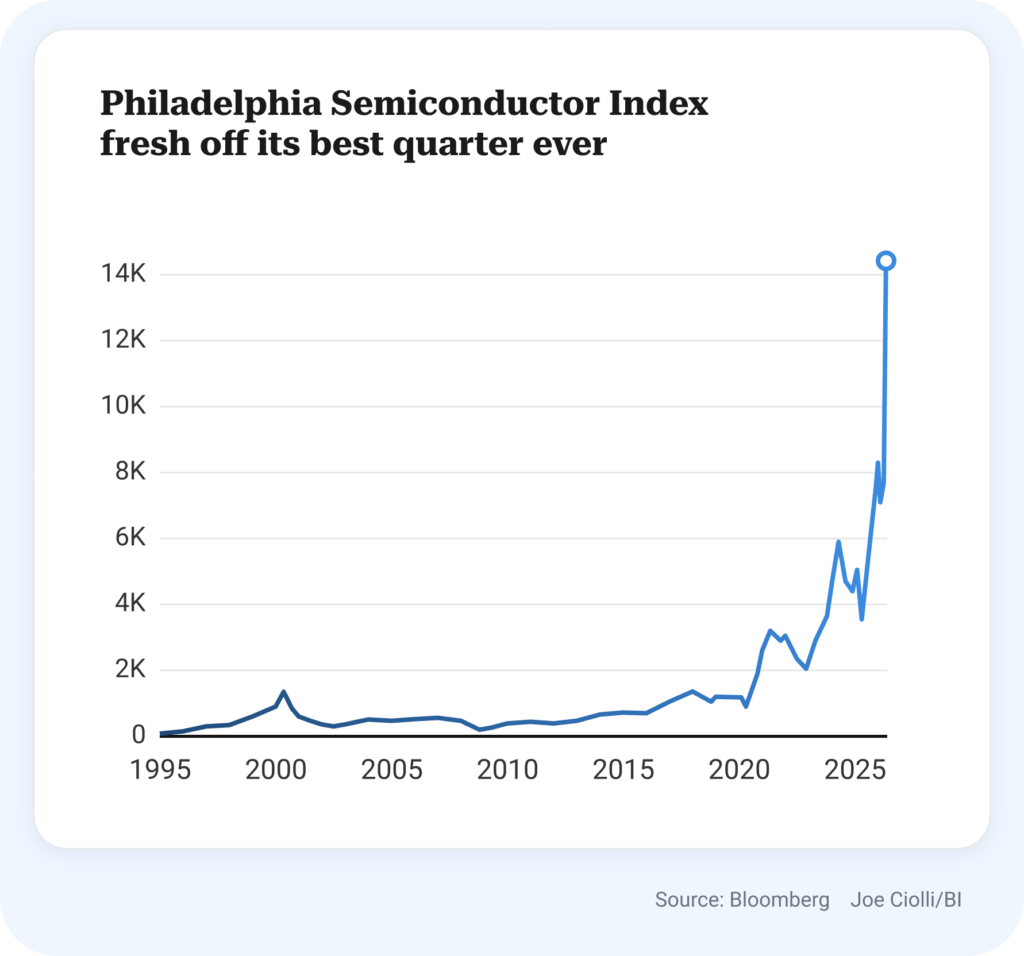
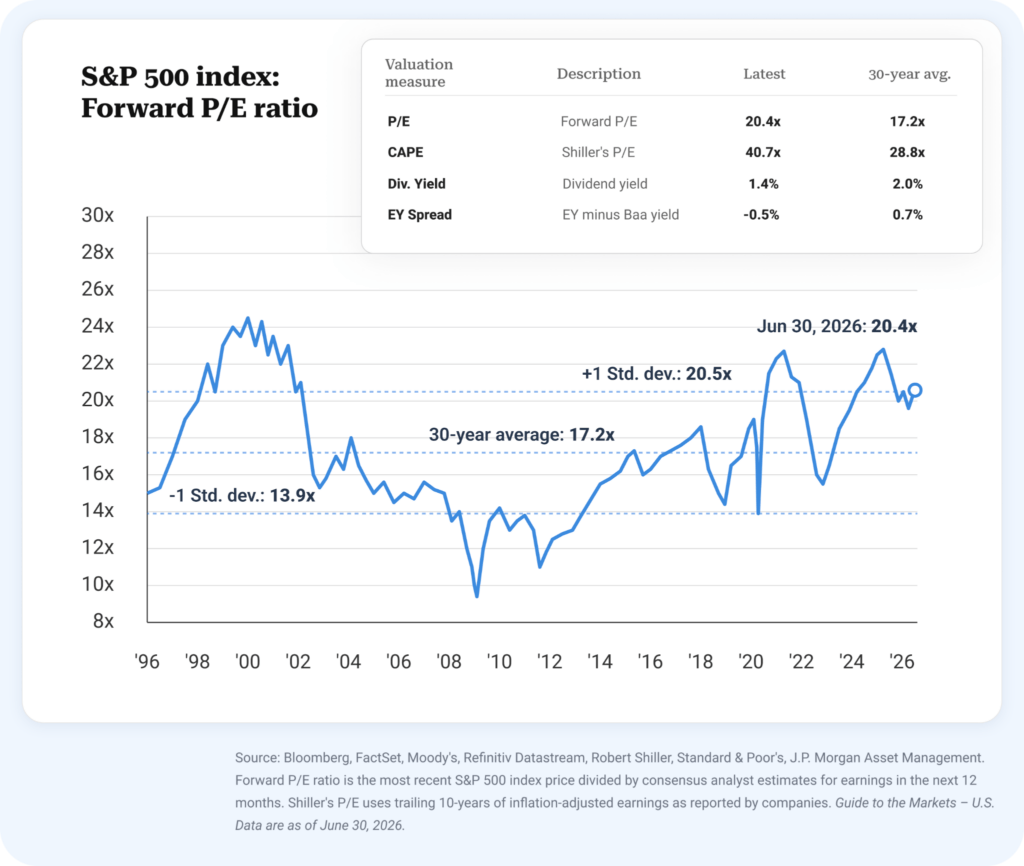
While Equities continue their march upward, there is growing concern around valuations. The S&P 500 is currently one standard deviation above its 30yr average forward P/E. Market historians are concerned that speculation may be running rampant.
Liz Ann Sonders, chief investment strategist at Charles Schwab, warned that gambling psychology is rapidly spilling over into the financial markets. “When I look at the landscape, the markets look increasingly casinolike,” she observed.
In a recent Harris Poll, 80% of Gen Z respondents admitted to making “high-risk or speculative” investments because they feel financially left behind. American households now hold an unprecedented 45.8% of their total financial assets directly in stocks, shattering the prior peak of 38.7% set at the top of the dot-com bubble in 2000.
All of this to say, that if/when the market experiences a correction, the impact will be more widespread.
In other equity market news this quarter, SpaceX completed the largest initial public offering in history, raising $75 billion. On its first day, the stock (NASDAQ: SPCX) surged 19% to close at $160.95, which gave the aerospace giant a market capitalization exceeding $2 trillion and making it one of the most highly valued companies in the world. What was unusual about the offering was that 30% of the IPO shares were allocated to individual retail investors. SPCX now trades at over 100 times trailing sales.
Cryptocurrency Markets
Speaking of speculative “investments”, in the crypto world, an extended bear market is known as a “crypto winter”. Let me tell you, it’s cold outside! Bitcoin’s slide continued in Q2, falling another 13% in Q2. This followed a 23% decline in the first quarter. Bitcoin has now seen a 53% drop from its all-time high of nearly $126,200 in October 2025.
What’s an Investor to Do?
Equity market frothiness. Crypto winter. Geopolitical tensions. Inflation fears. Volatility everywhere you turn. It’s understandable if investors are a little nervous about what to do in this environment. If you were fortunate enough to have been invested in Tech over the past 6-12 months, it might be wise to harvest some profits. No one is suggesting you should sell everything and go to cash but it would be prudent to make sure your portfolio remains well diversified.
Private markets offer the chance to invest in assets that provide above-average risk-adjusted returns and that have low correlations to public market securities.
At Groundfloor, it’s easy to get started.
> Take a look at how our Notes program, offering up to 8.5% fixed rates, can work for you.
Additionally, the Groundfloor Convertible Note is open for a limited time and filling fast – It is over 80% full at the time of this article. The Convertible Note offers:
- 11.5% APY
- Monthly Interest Payments
- A 2-Year Term
- Option to Convert to Groundfloor Equity or Rollover Into a New Convertible Note
It is the highest-yield fixed-term offering Groundfloor offers, and it’s almost sold out.